
Clinical trials have long relied on randomisation to ensure fair, unbiased allocation of participants to study arms. However, simple randomisation — where each participant has an equal chance of assignment — can lead to unpredictable imbalances, particularly in smaller studies or when multiple factors matter.
ProtoFlex has always supported randomisation as a core capability, but one of our customers recently asked for something more sophisticated: the ability to define and enforce pre-computed block randomisation schemes with optional stratified grouping.
The Challenge with Simple Randomisation
In studies with two arms, simple randomisation might allocate 25 of the first 30 participants to one group by chance alone. While mathematically unbiased, the practical consequences are real: unequal treatment numbers can compromise statistical power, complicate logistics, and reduce clinician confidence in the process.
Stratified randomisation helps, but only if you anticipate your stratification factors upfront. Real-world trials often discover that other factors matter — site, severity, previous exposure — but by then, you're locked into your original design.
What Are Block Randomisation Schemes?
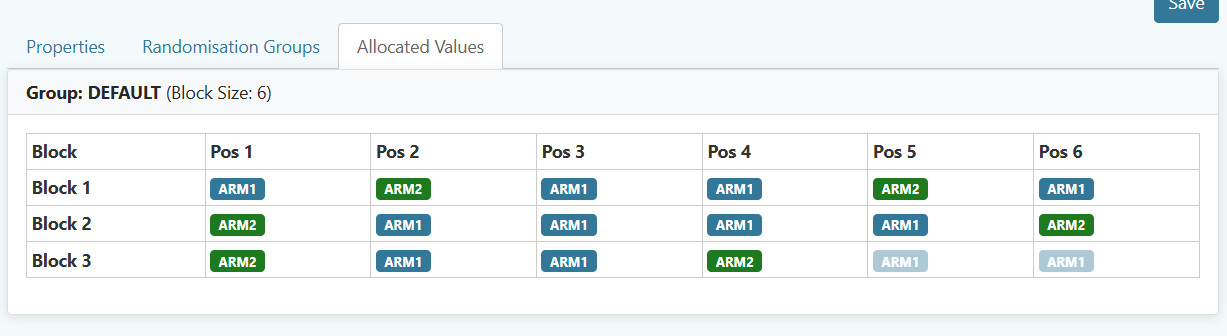
Block randomisation pre-defines the exact sequence of allocations within fixed-size blocks (e.g., blocks of 4, 6, or 8). Within each block, treatment assignment is randomised, but the block structure guarantees balance. For example, in a block of 4 with two arms, exactly 2 participants will go to each group — the randomisation determines only the order of assignment.
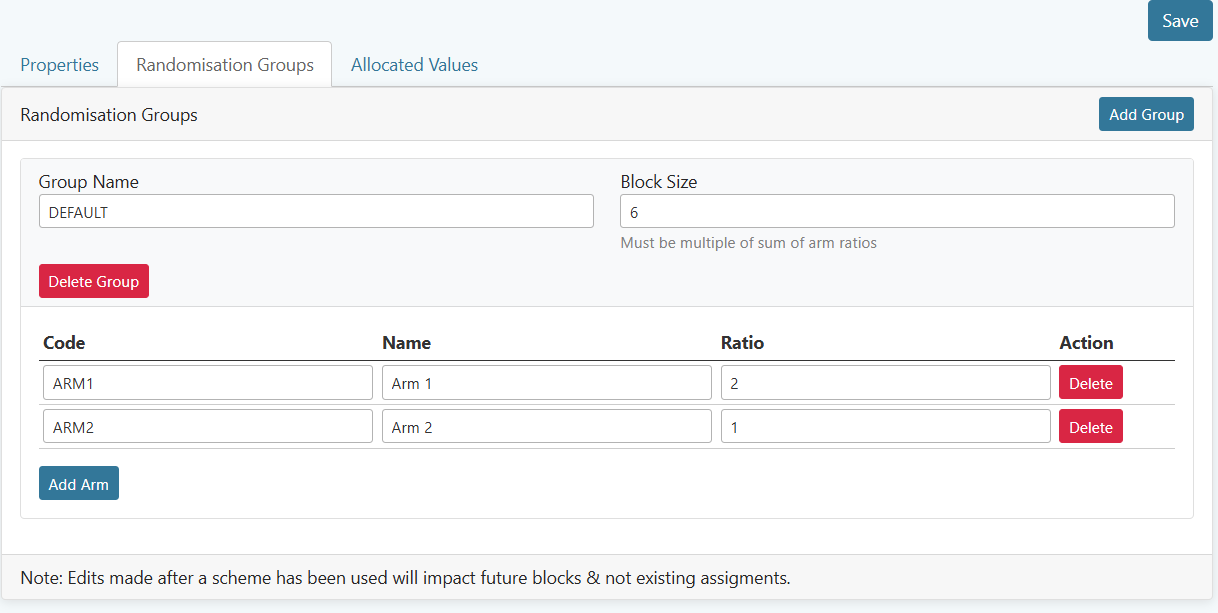
This approach delivers two critical advantages over simple randomisation:
- Predictable Balance: You guarantee equal (or near-equal) arm sizes throughout the trial, reducing statistical and operational variability.
- Stratification Without Compromise: By generating separate block schemes for each stratum (site, disease severity, baseline risk), you achieve fine-grained balance across multiple dimensions simultaneously — without pre-declaring every possible combination.
Why It Matters
One of our customers running a multi-site trial needed exactly this flexibility. They required a tight arm balance, but they also wanted to reserve the option to adjust their stratification layers as the trial evolved. Simple randomisation wouldn't deliver the guarantees they needed; fixed stratification was too rigid.
In response, we built configurable block randomisation directly into ProtoFlex. Now, you can:
- Pre-compute and upload block sequences for any combination of arms and block sizes
- Assign different block schemes to different strata dynamically
- Audit the exact allocation sequence and confirm it follows your protocol
- Update or rotate block schemes without restarting the trial
Beyond Clinical Trials
While block randomisation is a cornerstone of clinical research, the principle — controlled, predictable allocation with optional stratification — is equally powerful in other domains:
- Digital Health & Service Engagement: Allocate users to different digital interventions while maintaining demographic balance across cohorts.
- Educational Testing: Assign learners or educators to curriculum variants with guaranteed balance by school, experience level, or previous performance.
- Quality Improvement & Process Testing: Roll out new care processes across sites in a randomised but balanced manner, ensuring fair representation and preventing accidental bias.
In any context where fairness, auditability, and statistical rigour matter, block randomisation offers a proven framework. ProtoFlex makes it accessible and flexible enough to adapt to your evolving needs.
For more information or to arrange a full demonstration please contact us.